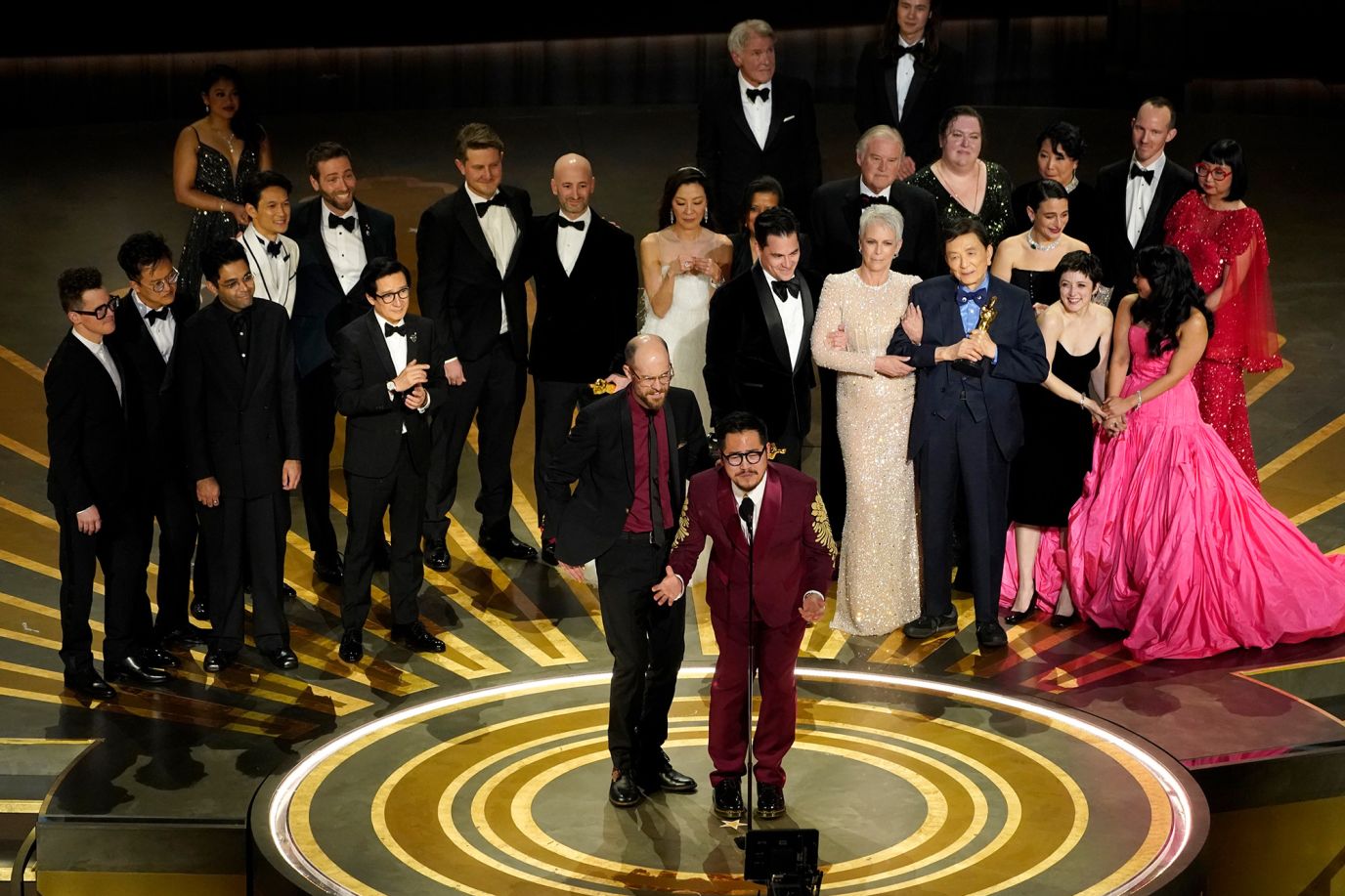
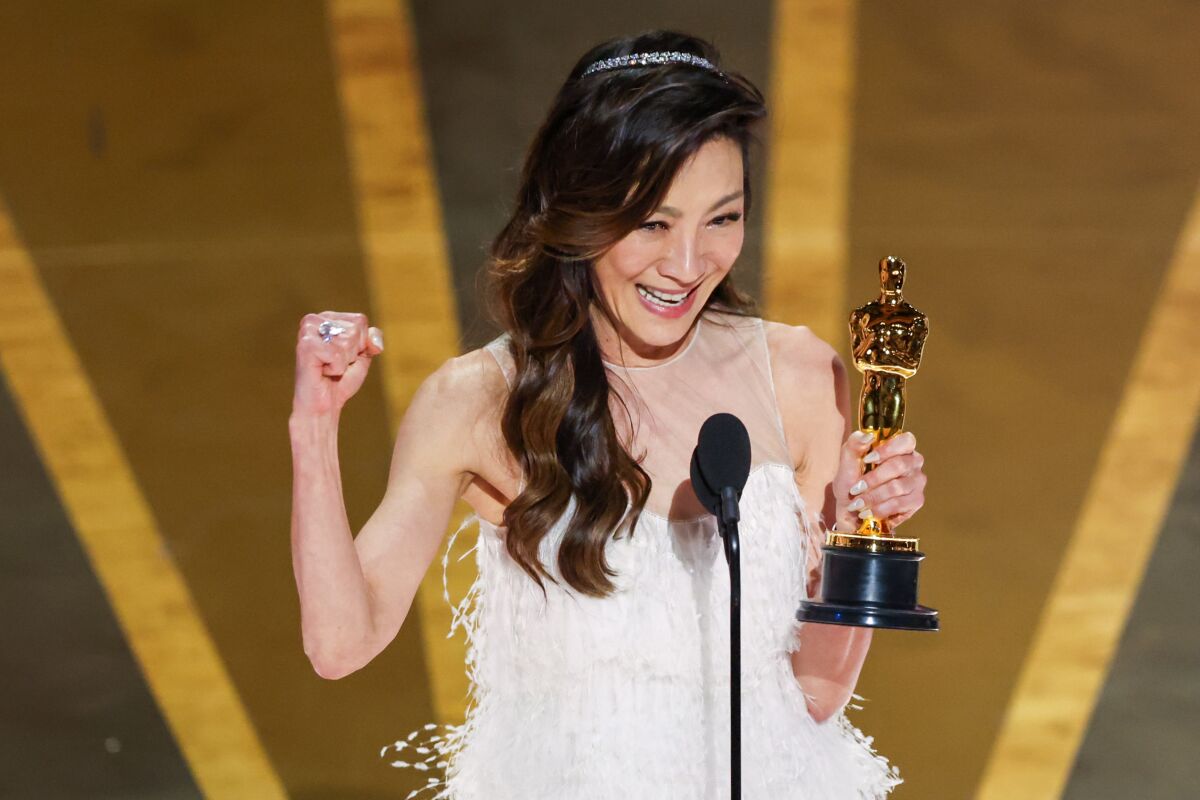
The Oscars for the films of 2024 were a fun affair. Host Conan O'Brien was in fine form, with sharp writing and some clever ad-libbing, and plenty of the goofy silliness of his most enjoyable work. I rarely see movies in the theaters anymore since the closing of the much missed Arclight Cinemas in Los Angeles and elsewhere. The Arclight theaters didn't run ads, prized good projection and sound systems, and encouraged respectful audiences. The remaining venues run tons of ads and it's sadly common for people to be on their phones at full brightness throughout a movie. So this year, rather than rooting for specific films, I mainly used the Oscars to add films to my viewing list, which includes Flow, Anora, The Brutalist, Conclave, Sing Sing, I'm Still Here, A Complete Unknown, Nickel Boys, No Other Land, and of course Wallace & Gromit: Vengeance Most Fowl.
Conan O'Brien started with a funny riff on The Substance, seeming to crawl out Demi Moore's collapsed body and then dive back in to get his lost shoe. It was an amusing bit, but O'Brien wanted to do a more extensive parody of the nominees similar to some of Billy Crystal's segments at past ceremonies. Alas, the Academy vetoed that and other good ideas ('Oscar cannot be horizontal and cannot be clothed'), so credit to O'Brien and his writers for coming up with good material despite the silly restrictions against fun.
Out here in Los Angeles, the two most welcome moments were O'Brien thanking the below-the-line crew, and the salute to Los Angeles area firefighters for their heroic work earlier this year in battling multiple huge, devastating fires.
On the international front, it was neat to see Latvia win its first Oscar for its animated feature Flow, Iranian filmmakers Hossein Molayemi and Shirin Sohani manage to just barely get to the Oscars in time to accept Best Animated Short for In the Shadow of the Cypress, and veteran Brazilian filmmaker Walter Salles win Best International Feature Film for I'm Still Here. They all gave heartfelt speeches, as did the Palestinian and Israeli filmmakers accepting the Best Documentary Feature award for No Other Land, speaking against bigotry and for peace.
The Latvian win allowed Conan to ad-lib, "Your move, Estonia," which he repeated nonsensically later in the broadcast in the best silly Conan O'Brien tradition. My favorite lead-in was him introducing Amy Poehler presenting the screenwriting awards, by saying something like, 'She plays Joy in Inside Out, and she's here to present Joy's opposite – screenwriting.' (As usual Poehler was sharp, dryly quipping, "I believe it was William Shakespeare who said, writing is a bitch.") My favorite visual gag, though, was the Dune sandworm playing the piano and later the harp, a costume designed by O'Brien's longtime collaborator Scott Cronick. It was vintage Conan, reminiscent of his NBC show recycling a bizarre beige costume at least half a dozen times, as everything from Jabba the Hut to a croissant.
The ceremony featured individual tributes to costume design and cinematography nominees, an approach that in the past has been limited to the acting categories. I'm not a big fan of the approach in general, because it slows down the ceremony, dreadfully so the first time it was done, but more smoothly since. On the positive side, it does give all the nominees and not just the eventual winner more recognition. And if the Academy is going to stick with that approach, it's nice if some non-actors get some love. (I presume different non-acting categories will get the special treatment next year, if the Academy sticks with the format.)
Ben Stiller continued his tradition of funny presentations. In the past, he's appeared in a green screen suit for visual effects and as a Na'vi from Avatar (although he can milk the gags too long). This time, he struggled with a stage lift that kept going up and down, and the bit worked well.
The montage of death was much better than in some recent years, with the producers wisely opting for classical music (Mozart's haunting Requiem) instead of dancers or a solo singer. Although it's never possible to include everyone, Alain Delon was a notable omission, and it would have been nice to include Tony Todd as well. (The annual TCM Remembers segment is always worth watching.)
Sean Baker cleaned up as a writer, editor, director, and producer (Best Picture) for Anora, a remarkable feat, all the more so because he said the film cost only about 6 million dollars. That does come with a significant caveat, however; some industry groups reported that Sean Baker fought against the crew unionizing, which affected their eligibility for important health care benefits. (The story was later picked up by The Hollywood Reporter.) It also would be nice to see more films give "points" or deferred wages to the crew, so that if a lower-budget project does become a big success, the crew and not just the above-the-line players could get a small piece of the profits.
I like Adrien Brody as an actor, and his speech started out well, with him remarking that "acting is a very fragile profession" and urging that we "not let hate go unchallenged." But Brody's speech became long, halting, and very self-indulgent. Oscar winners are given 45 seconds, although especially for the bigger awards, they're almost always given leeway. At four minutes into Brody's speech, the conductor started playing the exit music, and Brody asked him to stop, claiming he would be brief. He was not. Instead of wrapping up, he rambled on for another minute and thirty-seven seconds. (Just prepare a speech, dude, time it, and try to stick roughly to it.) I did not see Emilia Pérez, which originally received a fair amount of acclaim and then much backlash, mostly when past bigoted comments surfaced from star Karla Sofía Gascón. But Zoe Saldaña was electric in the clips I saw, so I was happy to see her emotional win. The Academy should crack down on abuse of the supporting role nominations, though. Kieran Culkin won Best Supporting Actor and gave a funny speech, but he's one of the two leads in A Real Pain, not a supporting actor. Likewise, Daniel Kaluuya won Best Supporting Actor for the 2021 film Judas and the Black Messiah despite being one of the two leads and the title character. The same criticism may apply to Saldaña, who's second on the billing for Emilia Pérez, but I haven't seen it yet.
Anyway, here's to cinema, catching up on some good 2024 releases, and may 2025 be a good year for film.
2023 had some notable films. Since the pandemic, I rarely go to movie theaters anymore, but did see Indiana Jones and the Dial of Destiny and Godzilla Minus One. At home I saw the twin juggernauts, Oppenheimer and Barbie, as well as Killers of the Flower Moon and Asteroid City. I was glad to see both documentary winners, 20 Days in Mariupol (feature) and The Last Repair Shop (short). More summer-ish fare included Guardians of the Galaxy Vol. 3, Ant-Man and the Wasp: Quantumania,Dungeons & Dragons: Honor Among Thieves, Gran Turismo and The Creator. Later this year I intend to see Poor Things, The Holdovers, Anatomy of a Fall, The Zone of Interest, American Fiction, Maestro, The Boy and the Heron and Spider-Man: Across the Spider-Verse.
The Oscars show was memorable and fun this year, although it had some misses as well. It started on a good note, though, with Jimmy Kimmel thanking the crew for supporting the WGA and SAG strikes, and pledging support for future negotiations by other unions. He was joined on stage by the Oscars crew, and they all received a standing ovation.
I was not happy to see the Oscars bring back individual tributes to each of the acting nominees by past nominees. The tributes did move along quicker than last time, and the approach does honor each nominee rather than just the winner. But only the actors get this special treatment, and it slows down the ceremony. Yes, actors are the most recognizable nominees to the public, but filmmaking is a collaborative effort, and I'd like to see that emphasized and thespian narcissism discouraged.
The acceptance speeches had several good moments. Robert Downey, Jr. gave a sweet thank you to his wife. I'm always fond of the writers, and Justine Triet and Arthur Harari were charmingly French accepting Best Original Screenplay for Anatomy of a Fall. Cord Jefferson, winning Best Adapted Screenplay for American Fiction, gave probably my favorite speech of the night:
I’ve been talking a lot about how many people passed on this movie, and I worry that sometimes sounds vindictive. I don’t want to be vindictive, I’m not a vindictive person anymore and I’ve worked very hard to not be vindictive anymore. It's more a plea to acknowledge and recognize that there are so many people out there who want the opportunity that I was given. . . . I understand that this is a risk-averse industry, I get it. But $200 million movies are also a risk. And it doesn’t always work out, but you take the risk anyway. Instead of making one $200 million movie, try making 20 $10 million movies. Or 50 $4 million movies. There are so many people, I just feel so much joy being here, I felt so much joy making this movie, and I want other people to experience that joy, and they are out there, I promise you. The next Martin Scorsese, the next Greta, both Gretas, the next Christopher Nolan, I promise you. They just want a shot, and we can give them one, and this has changed my life. Thank you all who worked on this movie, for trusting a 40-year-old black guy who had never directed before, it has changed my life.
The Godzilla team, winning for Best Visual Effects, all came on stage holding Godzilla figures (and I later learned, wearing Godzilla-themed shoes). Hoyte van Hoytema, winning Best Cinematography for Oppenheimer, extoled the virtues of shooting on film. Although I still haven't seen and heard The Zone of Interest yet – it's one of the 2023 films I'm most eager to experience – I caught some interviews with its sound designer and heard some his innovative work, and cheered out loud when it won for Best Sound.
Mstyslav Chernov, winning Best Documentary Feature Film for 20 Days in Mariupol, which chronicles Russia's siege of the Ukrainian port city of Mariupol, gave a touching speech saying he wished his film didn't need to be made, and wishing for the return of hostages and for peace. (The film is on PBS' Frontline and can be seen if you have PBS Passport or possibly in reruns.)
I was happy to see The Last Repair Shop win Best Documentary Short Film, and director Kris Bowers gave a nice speech about the value of the arts and public schools. It's a lovely, moving film that received decent local coverage. Los Angeles County is one of the few school systems in the U.S. that still doesn't charge students for musical instruments, and inevitably, instruments have to be repaired. The film alternates between short interviews with students, many who would not be able to afford instruments on their own, and longer interviews with several employees at the shop, who all have extraordinary personal stories and clearly view their work fixing instruments for students as a higher calling. It's also got a sweet ending. Check it out if you can.
Of the presenters, John Cena did a funny nude bit. Melissa McCarthy has been hilarious in past ceremonies, but her bit with Octavia Spencer was disappointingly stiff. Kate McKinnon and America Ferrera were funny presenting the documentary awards, with Steven Spielberg in the audience part of the bit as well, as Ferrara explained to McKinnon that the Jurassic Park movies were not, in fact, documentaries. Emily Blunt and Ryan Gosling were great bantering, introducing a salute to stunt teams. (They're appearing together in a film version of the The Fall Guy later this year.) Ariana Grande pulled the impressive feat of performing on Saturday Night Live in New York City on Saturday night and then presenting at the Oscars in Los Angeles on Sunday... in a down comforter. John Mulaney gave the funniest individual speech of the night introducing Best Sound, started by talking about the history of sound in film and then shifting into a lengthy digression about the plot of Field Of Dreams and the rules of "ghost baseball." It was vintage Mulaney, thoughtful, geeky and hilarious.
The montage of death was particularly disappointing this year, the worst I can remember. The music was all right, Andrea Bocelli and his son Matteo singing, "Time to Say Goodbye," although classical instrumental music, dialed down, works better if the montage features any audio. Regardless, having dancers, and cutting to them for most of the segment, was an awful decision. Viewers should see the images of the people who died, and that was barely possible except for a dozen or so. The segment even ended with a wide shot listing a long list of names of people not pictured in the montage, and it was completely illegible for viewers at home, and probably for the attendees in the theater as well.
I was not a fan of Billie Eilish being given a Bond song because it's really not her style, her Oscar win notwithstanding. But I thought her Best Original Song winner this time for Barbie, the existential "What Was I Made For?" was great – hushed and wistful, right in her wheelhouse, and a song that works decently outside of the movie but extremely well inside the movie. It had a bad mix at the show, though, and I remain baffled that such occurrences happen so frequently at the Oscars.
"I'm Just Ken" from Barbie was not the best song, but was easily the best performance, with Ryan Gosling and a large cast going completely over the top the way only a comedy song or a Bollywood musical number can pull off. In an homage to Marilyn Monroe in Gentlemen Prefer Blondes, Gosling dressed in flaming pink, hammed it up and was joined by songwriter Mark Ronson, plus Simu Liu, Kingsley Ben-Adir, Ncuti Gatwa, Scott Evans and an entourage of other Kens. Taking the number all the way to 11, Slash appeared on stage, playing blazing guitar riffs. Apparently Gosling, the crew and most of the cast started rehearsals four weeks out, and Gosling made sure the steadicam operator Sean Flannery was cool with being pulled on stage and having his hand kissed. You can see the number here.
2023 seemed to have a number of genuinely good films. Here's to a good 2024 in cinema.
The 2022 version of All Quiet on the Western Front is a decent war film. I just wish it wasn't called All Quiet on the Western Front, because it keeps only the basic framework of the novel and makes significant changes that weaken the core story. That's a shame, because this is the first German film version of the justly famous German war novel by Erich Maria Remarque, and I was intrigued to see it.
Directed by Edward Berger and cowritten by Berger, Lesley Paterson and Ian Stokell, the story still centers on Paul Bäumer, a German teenager who is inspired to volunteer for the army along with several of his classmates because of the patriotic speeches of one of their teachers. Their idealism is quickly crushed by the brutal realities of the conflict that came to be known as The Great War and later World War I. Paul and his friends do find a bit of luck in being looked after by an older, veteran soldier, Stanislaus Katczinsky, nicknamed "Kat," who has an uncanny knack for finding food in a war zone and has a host of useful survival tips. Paul and the others experience the terror of trench warfare and bombings, charging across no man's land against machine guns, awful and scant food, rats, cold weather, and the wounding, maiming or even death of their friends and comrades.
All Quiet on the Western Front is well-shot, with some memorable, haunting images. The score is mostly avant-garde, minimalist, and not period, but its main, three-note riff is effectively disconcerting, and earned composer Volker Bertelmann (a.k.a. Hauschka) an Oscar. One of the key sequences from the book, Paul faced with the prospect of killing a man to preserve his own life, is nicely done, capturing the fear and regret of the whole encounter. Multiple harrowing incidents and gruesome deaths leave no doubt that war is not glorious. (Some of the war scenes are quite effective, but I did find myself pulled out by others. 'How can he still be walking after that wound?' 'Why do those tanks have no support?' and so on.) The standouts in the cast are Felix Kammerer as Paul, Albrecht Schuch as Kat, and Daniel Brühl as Matthias Erzberger, a German politician (and real person).
The filmmakers often opt for spectacle and shock rather than more subtle human experiences. For instance, a character who in the novel is struggling to imagine life after the war with a missing limb dies in a nasty way instead. Taken on its own, the shock is effective, but we get plenty other similar moments in the movie, and lose a different color that could have deepened the story.
The novel stays focuses on Paul and his comrades, but this version shows German officials (most notably Erzberger) negotiating with the French for peace, and shows a German general hell-bent on seizing territory in the last hours before the armistice takes effect. The French are mostly depicted as cruel bastards at the negotiating table and on the battlefield. (And arguably in civilian encounters, too.) The scenes are interesting in that they're invented by the German filmmakers and postulate the roots of World War II, suggesting that the more right-wing German elements, especially in the military, blamed the German politicians and the intractable French for Germany's disgrace. Such attitudes certainly did exist at the time – shortly after the war, Erzberger was assassinated by a right-wing group, and Hitler and others enflamed their followers with the stab-in-the-back myth, or Dolchstoßlegende. So getting a contemporary German perspective on these past events was intriguing, but the film really seems to lay it on thick in villainizing the French. Likewise, the filmmakers' choices in changing the ending seem problematic symbolically. (I would hope the symbolism was unintentional, but if so, why didn't it occur to them?)
The ultimate fate of key characters in this film version versus the book remain the same even if the particulars differ, and the general idea that war is often pointless and full of needless suffering does come through. The exact ending of the novel is also admittedly somewhat difficult to convey on film, although the 1930 adaptation does a pretty good job of devising a visual and emotional equivalent. Still, some of the particulars of the original ending are arguably rather important. The filmmakers opt to convey the idea that violence and hatred are cyclical, and passed down, which is all well and good, if an add-on. But much of the strength of the novel, and 1930 film, hinges on the bond between Paul and Kat. We do spend time with them in this film, but we really get to know and like them in the novel and the 1930 film. That gives the older movie much more emotional heft. One of the cardinal rules of good adaptation is that, if you change something, make it better. Perhaps you need to translate a moment into the new medium (as, for instance, The Lord of the Rings trilogy often does). The 2022 version of All Quiet on the Western Front strays from the central story to make other commentary, which would be fine in another film, or perhaps a better adaptation could have handled both elements. But here, the significant changes feel like unforced errors and a waste of stronger and more compelling source material.
U.S. and U.K. critics generally liked the film; it was nominated for nine Oscars and won four, including Best International Feature Film, and was nominated for 14 BAFTAs, winning seven. German critics were less kind, feeling it was deliberate Oscar-bait, historically inaccurate and did a disservice to the novel, a staple of many German school curricula. The most scathing critique probably came from Hubert Wetzel, who said "you have to ask yourself whether director Berger has even read Remarque’s novel." I'm guessing he read it but didn't understand the heart of the story. This version definitely feels like it's capitalizing on the famous title to make a different film. I do think that different film is still worth a look with appropriately lowered expectations, but given the title and the hype, I was hoping for better.
It's been years since I read the novel and saw the 1930 film (I haven't seen the 1979 TV adaptation), so I decided to watch it again. Directed by Lewis Milestone, it won him Best Director and Best Picture at the Oscars. It holds up fairly well and is a pretty faithful adaptation. The talkies era was still relatively new, and microphones not great. Some of the acting is theatrical and dated. Other moments, especially silent facial expressions, are quite effective. Many of the shots, including a wide shot of a town and the battle scenes, are very technically impressive for the era. About 50 minutes in, there's a roughly 10-minute sequence of an attack on the trenches and a counterattack, with long dolly shots moving one way and then back, with machine guns sputtering away and men charging and falling, that remains a marvel of storytelling and technique. It is harrowing, it is shocking, it is relentless, it is moving. (Steven Spielberg reportedly watched every war movie he could find before making Saving Private Ryan, and he definitely watched the 1930 version of All Quiet on the Western Front.) There's a bit in the novel about Paul's group of soldiers talking about taking their dying friend's nice boots, which might seem ghoulish to those back home, but they reason that someone else would just steal them and he'd have preferred that one of his buddies get them instead. In the 1930 film, this bit is rendered as a scene and a short, wordless montage. Read the passage and then see the movie sequence and you'll recognize it as a fine piece of adaptation and cinematic storytelling. The film's biggest strength is its emotional core, which depends not just on the combat scenes but the human relationships. Katz, played by Louis Wolheim, rather than being the tough-as-nails veteran scolding the new guys that we've seen in countless movies, is disarmingly compassionate, even when a greenhorn soils his pants in fear. We really get to like Katz, Lew Ayres as Paul, and some of the rest of the squad. I admired and appreciated some of the scenes in the 2022 film. But I was honestly much more moved by the 1930 film. There's no reason you can't watch both (and read the novel as well), but unless you can't stand old movies, if you could see only one version, I'd go with the 1930 one. (The Universal Blu-ray is a nice transfer, and it's remarkable to think that the film is almost 100 years old.)
The pandemic has certainly changed movie-going, at least for me. I used to see 20 to 30 films a year in the theater (more in earlier decades), but in 2022, didn't see any. I did catch several Oscar nominees via streaming services or on disc.
This year's Oscar recipients included at least two comeback winners and another two long-time stalwarts finally getting recognized, making for a pleasant night.
Jimmy Kimmel delivered a decent opening monologue. Despite a hoarse voice, Elizabeth Banks was funny copresenting the Visual Effects award with an actor in a bear costume, a nod to her recent film, Cocaine Bear.
Charlie Mackesy and Matthew Freud were charming and Britishly self-effacing while accepting their win for Best Animated Short, "The Boy, the Mole, the Fox and the Horse." (I haven't seen it yet, but it's got a cool, lovely style in the clips.) Freud started by saying, "I know the protocol is to say 'thank you' a lot, but I'm British, so I'm more comfortable saying 'sorry.' "
Ke Huy Quan opened the night on a strong note with an emotional, grateful speech for winning Best Supporting Actor. Viewers of a certain age may remember Quan fondly from 80s films Indiana Jones and the Temple of Doom and The Goonies, and he gives a memorable, affecting performance in Everything Everywhere All at Once. It makes for a nice comeback story. Meanwhile, one of his costars, Jamie Lee Curtis, who's been working and good for ages, gave a gracious speech thanking her crew and everyone with the refrain, "We won an Oscar."
Rounding out the acting categories, Brendan Fraser gave a moving, emotional speech about his career and how thankful he was for its resurgence. Fraser's acting chops were probably somewhat overlooked in his earlier, bohunk days, but he's always been solid, and particularly memorable in Gods and Monsters, the fun and eminently watchable The Mummy and a great episode arc on the TV show Scrubs. I was happy to see him win. As a long-time fan of Michelle Yeoh, I was likewise glad to see her win and hear her speech, thanking parents, speaking to "all the little boys and girls who look like me," and saying, "Ladies, don't let anyone tell you you are ever past your prime."
Daniel Kwan and Daniel Scheinert ("the Daniels") took the stage three times, first for Best Original Screenplay , giving a warm shout-out to teachers. The second time was for Directing, and the speeches thanked parents, film crews, and expressed support for LGBT kids and immigrants. The third time was with the rest of the cast and crew for Everything Everywhere All at Once winning Best Picture. I need to see the film again, but I liked it overall. I thought it went on a bit long and became somewhat repetitive, but I appreciated its originality, energy, and willingness to be silly, bizarre and sometimes flat-out bonkers. It was also enjoyable to see 94-year-old cast member James Hong making the awards circuit, getting a Hollywood star, and talking about how much things have changed for the better for Asian actors in Hollywood.
Sarah Polley gave an eloquent speech accepting the Oscar for Best Adapted Screenplay. Besides thanking her cast, crew, and loved ones, she said, "Miriam Toews wrote an essential novel about a radical act of democracy in which people who don’t agree on every single issue manage to sit together in a room and carve out a way forward together free of violence. They do so not just by talking but also by listening." I've liked Polley since her days as a child actress in the The Adventures of Baron Munchausen, liked her performances as a young adult in Go and The Sweet Hereafter (also her singing in that one), and I've been glad to see her become successful as a writer and director.
The Oscars' montage game is typically strong, and this year featured a nice one celebrating Warner Brothers 100th anniversary. Disney was celebrating 100 years, too, but unfortunately chose to use its time to hawk its live-action remake of The Little Mermaid instead.
Musically, David Byrne and Lady Gaga both started surprisingly off during their best nominated song performances, with Byrne being off-key and Gaga sounding pretty rough, although both seemed to recover. I thought the best nominated song was "Lift Me Up" from Black Panther: Wakanda Forever, cowritten and performed by Rihanna, and Danai Gurai gave the song a nice introduction honoring Chadwick Boseman, gone too soon. Still, it was neat to see a Bollywood nominee win, "Naatu Naatu," and its team gave a rousing performance during the Oscars. Meanwhile, Lenny Kravitz did a lovely job performing "Calling All Angels" during the Montage of Death.
All in all, it was one of the more enjoyable Oscar ceremonies of recent years. I like seeing good work recognized and people whose work I like getting awards. This year, I was particularly pleased to see that one of the honorary Oscars went to Australian director Peter Weir. It's well worth checking out Jeff Bridges' introduction and Peter Weir's speech, because they can speak for 10 to 15 minutes and tell some great stories. You could also check out some of Weir's superb movies, including Galipoli, Witness, The Year of Living Dangerously, Dead Poets Society, Fearless, and Master and Commander: The Far Side of the World.
No epic film roundup this year, but I might post some film reviews later and link them here. It can be harder to see more independent fare on streaming services, and I still order discs, but the 2022 films I saw were Everything Everywhere All at Once, The Fabelmans, Women Talking, All Quiet on the Western Front, Death on the Nile, Glass Onion, Black Panther: Wakanda Forever, Doctor Strange in the Multiverse of Madness, Thor: Love and Thunder, Prey, and Weird: The Al Yankovic Story. I'll be seeing Living later this year and probably Triangle of Sadness. Feel free to pass on any film recommendations.
I was able to see a handful of the nominees this year, but still not that many. Going to the movies is safer than it was before a COVID-19 vaccine was available, but it's still a bit daunting. Many of the nominees are not on disc yet and some of them are only available on a single streaming service. I did see Dune on the big screen, and it definitely benefits from it. I also managed to see Belfast, The Power of the Dog, Don't Look Up and No Time to Die. I expect to see Licorice Pizza, Encanto, West Side Story, Spider-Man: No Way Home and Shang-Chi and The Legend of the Ten Rings later this year. I also hope to see Coda, The Tragedy of Macbeth, Drive My Car, The Worst Person in the World, Parallel Mothers, The Lost Daughter, Being the Ricardos, Summer of Soul, Flee, tick, tick..BOOM! and Raya and the Last Dragon, among others.
The Oscars this year had two big scandals. The first was the decision not to include several "craft" awards during the live broadcast, and instead record them earlier and edit the footage into the live show. The decision was widely criticized by industry professionals, and led to some Academy members resigning. The slighted awards were the three short film categories, film editing, music (original score), sound, production design, and makeup and hairstyling, as well as all the honorary Oscars. The segments were at least edited in fairly well, but excluding the categories from the live event was a horrible choice. It showed a lack of respect for the art and craft of filmmaking. And the Academy once again chose to fruitlessly chase a larger audience while alienating the core audience of film lovers. The show could have been made shorter by not adding an un-nominated Encanto musical number, for example, but it's a Disney film and Disney owns ABC. The ratings did jump up significantly from the previous year, but given the pandemic, that's hardly surprising; ratings were still the second-worst ever.
The second scandal, which obviously got much more attention, was Will Smith storming the stage and smacking comedian Chris Rock over a joke: "Jada, love ya – G.I. Jane 2, can't wait to see it." The joke fell flat in the room and it took me a minute to figure out what the intended gag was – a reference to Jada's bald head. (G.I. Jane came out way back in 1997, and pop-culture-wise, it's mostly known for Demi Moore shaving her head.) Like the audience in the theater, when Will Smith went on stage, I thought it was a planned bit, until the audio cut out and the camera showed Smith angrily yelling without sound. (You can see the footage here.) I've seen umpteen takes on this, and at least one sympathetically condemns Smith's actions while contextualizing it within his tough, even abusive upbringing, and theorizing that Smith still needs to come to terms with it. I thought Smith's actions set a horrible precedent – assaulting a comedian because you don't like a joke, or any performer because you don't like their act. I also thought it completely undercut what should have been Smith's biggest night, because he was the favorite to win Best Actor, and did indeed win it. I understand the audience being shocked and not sure what to do, but I thought it was gutless to give Smith a standing ovation after what he did. There's some disagreement over whether Smith was asked to leave and whether he refused, or if he was told to stay. Although Smith's PR team put out a well-written, contrite statement the next day, Smith himself was partying that night as if nothing had happened. He's since resigned his Academy membership and been banned from attending the Oscars for 10 years.
I can't say I'm a big Will Smith fan but don't dislike him, either – I think he's become a pretty good actor and was quite good in The Pursuit of Happyness. And his reputation had been getting steadily better over the years. I understand getting upset over a personal joke against one's self or a family member, but it's par for the course for these events, public figures should be used to it, the joke was pretty tame, and it fell flat with the audience. No one was really laughing at Jada Pinkett Smith, and most viewers probably thought, like me, that she had shaved her head and didn't know she had alopecia. The Oscar after-parties can get pretty wild, but many attendees also show up drunk or high before the ceremony, and I have to wonder if that contributed to Will Smith's astonishingly poor judgment and lack of restraint and maturity. The way to deal with a joke you don't like is to talk to the comedian afterward, or make a joke back, or to call it out in the press as a cheap shot, not assault and battery on live television… especially when you're a featured guest favored to get a big award. My sympathies are strongly with the performers for all such incidents.
Although Will Smith's actions overshadowed most of the night, it's worth checking out some of the award speeches if you missed them, particularly Ariana DeBose for Best Supporting Actress, who gave a shout-out to queer youth and the power of the arts, and Troy Kotsur for Best Supporting Actor, who hailed the deaf community. I was also personally happy to see the multitalented Kenneth Branagh finally win an Oscar, in this case for Best Original Screenplay. As for the rest of the ceremony, I thought the triple hosts of Regina Hall, Amy Schumer and Wanda Sykes were pretty good. The song-and-dance number during the Montage of Death was rousing and fine on its own merits, but a pretty bad choice in context, because it completely distracted from the images of the deceased.
In any case, I'm going to try to see all the films mentioned earlier, and I hope 2022 turns out to be a good year for film.
This is the first year since I started watching the Oscars that I hadn't seen any of the nominees. (I probably started watching at five years old, not that I was allowed to stay up for the whole event.) Normally this post is also "The Year in Review," linking my reviews of all the films I've seen for the year in question. Because of the pandemic, I didn't see many films in theaters before everything closed in March 2020, and I didn't spring for specific streaming services or pay-per-view screenings. I did watch a ton of movies and TV shows on disc.
I thought some of the speeches were nice, although this year none of the winners were played off and some tended to go on too long. The most charming speech for me was from 73-year-old, South Korean Yuh-Jung Youn, who won Best Supporting Actress for her performance in Minari. (This article gives some good background on her, but does give away a key plot point of the movie.)
Harrison Ford had a funny bit presenting the Oscar for Best Editing, reading negative feedback from screenings of Blade Runner. (He almost certainly skipped rehearsal, though, because he read from a crinkly paper and all that text could have been fed into the teleprompter instead.)
The montage of death (in memoriam segment) is normally very well done, and a moving highlight of the ceremony. This year, it was the most rushed I can remember – each person was shown for only one single second (I counted) until the montage finally slowed down a bit at the end. Perhaps, due to the pandemic, more people died and have to be included in this installment. Or because the audience was smaller than usual, the usual applause wasn't going to be audible, so the show producers opted for this approach. But I thought it was a shame.
I was particularly appalled that Best Actress and Best Actor were the last categories presented, after Best Picture. (I would also keep Best Directing as the penultimate award presented.) The leading theory is that the show producers thought that popular actor Chadwick Boseman, who died tragically last year, was going to win Best Actor and that would end the night on a high note. If so, that choice was full of hubris and stupidity; there's no sure thing, as Oscars nights of recent years have repeatedly shown. (Winner Anthony Hopkins didn't attend, making the night even more anticlimactic, but recorded a gracious thank you from Wales, including a nice mention of Boseman.)
Regardless of whether Boseman played a role in the producers changing the order of the categories, it remained a really dumb decision. Why highlight individual performances over the best films of the year? It reminded me of the 2012 Screen Actors Guild Awards, which ran some self-congratulatory ads that boasted it was "The only award show where every award goes to an actor." Because who cares about the other, little people who make movies? Some actors are lovely people in real life, but as a group… they do deserve their reputation as the vainest, most self-absorbed people in the film business (even if some directors and producers come close). For the love of cinema, it's a horrible idea to encourage the mentality that actors are more important than the movie itself. Filmmaking is about more than who's on camera, and although a great performance can make a film and should be celebrated, that's rarely been a problem; actors already get more recognition than everyone else involved. The best films are team efforts.
In this specific case, switching the order also stole attention from a pretty remarkable story: Nomadland won Best Picture, and its director, Chloé Zhao, became only the second woman to win an Oscar for Best Directing and the first woman of color. She was born in Beijing but was mostly educated in the U.S. and lives here now, and coverage of her and Nomadland has been partially censored by the Chinese government. That's quite interesting stuff. So it's possible that Steven Soderbergh and the other Oscar producers were trying to manufacture a big moment and undercut some good, organic ones instead.
I had mixed feelings about the two sound awards being combined into one. On the one hand, sound editing and sound mixing are different jobs. On the other hand, Oscar voters repeatedly did not understand the difference between the categories and even entertainment reporters would explain them incorrectly. (Most simply, the editing is the sound effects, including ambience and Foley work, and the mixing creates the overall soundscape of elements, balancing dialogue, effects, and music.) I would also say the voters botched their choices repeatedly – the nominees, which are determined by a smaller group of sound people, have been consistently good, but the majority of Oscar voters are actors and would often give best mixing to the best editing job and vice versa, or give both awards to the same film, normally the one with the most conspicuous music or loudest noises, not necessarily the best job.
The problem is that most good sound jobs are unobtrusive and not meant to be noticed; nonprofessionals will notice the grandeur of the score and spectacular sound effects for a film like Star Wars, but typically not pick up on more subtle work. It's pretty rare that a film ever won a sound Oscar for a bad sound job – as my sound mentor explained, Jaws (1975) won despite not having great dialogue work, but the award at the time was "Best Sound" and was understood to be for best use of sound, and Jaws was highly memorable on that count. Likewise, for films in 2018, I wrote that "Bohemian Rhapsody [which won both awards] featured some great sound work (I've included links with my review), but I would have given Best Sound Editing to First Man for the tension-ratcheting sounds of its space program and Best Sound Mixing to Roma for its lovely (and occasionally disturbing) soundscapes." I think First Man and Roma did their jobs so well nonprofessionals didn't notice the quality of the work, but Bohemian Rhapsody was a worthy winner in both categories nonetheless.
In any case, the new category seems to have expanded the nominee limit; it seems to be five now, versus three before, so the key members of the sound team can share the win, as they did this year for Sound of Metal. This Hollywood Reporter article summarizes the sound community's reaction well, and I agree the category might be better named as Best Sound Design.
I thought all five Best Original Song nominees were pretty good, which is often not the case. The winner, "Fight for You" by H.E.R., Dernst Emile II and Tiara Thomas, was a solid pick. Leslie Odom Jr. did a lovely job singing on "Speak Now," which he cowrote; "Hear My Voice" has a neat vibe; "Io sì (Seen)" is a fairly typical Diane Warren ballad, albeit in Italian (and with too much reverb for my tastes), but it's nice enough; and Molly Sandén shows off some amazing pipes on "Husavik (My Home Town)."
Anyway, if nothing else the Oscars nominations and winners make a nice list of viewing recommendations. I'm planning to see Nomadland, Judas and the Black Messiah, Sound of Metal, Minari, Promising Young Woman, One Night in Miami, Ma Rainey's Black Bottom, The Trial of the Chicago 7, The Father, Onward, Soul, Wolfwalkers, The United States vs. Billie Holiday, the Borat sequel, and Mank.
2019 wound up being a surprisingly good year for film, with many solid entries and a handful of standouts likely to be remembered for years to come.
The Oscars were fun this year due to several especially worthy recipients and some good segments. The set was pretty cool, I thought, providing some visual interest and malleability. Janelle Monae, a natural performer seemingly unfazed even by a huge audience, got things going with a spirited opening number that also featured Billy Porter. The rest of the evening wouldn't be as diverse, but Monae and crew were sensational. Although the Oscars didn't have designated hosts, Steve Martin and Chris Rock "not hosting" were quite good together. Martin remains my favorite host of the past few decades.
The Best Song category had some good performances but also some oddities. Eminem showed up to sing "Lose Yourself" (heavily bleeped), 17 years after it won the Oscar. It's a catchy song, but his appearance felt random. I'm not a huge fan of Frozen, but I thought it was neat to have a cast of international Elsas singing "Let It Go." The Elton John-Bernie Taupin song "(I'm Gonna) Love Me Again" is decent, but its win felt like more of a lifetime achievement award than for its own merits, although this wasn't the strongest year for nominees. Elton John, who won before with lyricist Tim Rice for 1994's "Can You Feel the Love Tonight," graciously let his longtime collaborator Taupin do most of the talking this time. "Daily Battles," a moody piece written by Radiohead's Thom Yorke for the film Motherless Brooklyn, made the initial nomination list of 15 but unfortunately did not make the final shortlist of 5. Meanwhile, "Stand Up" from the film Harriet is a pretty good song, and actress and singer Cynthia Erivo absolutely slayed it during her performance.
Standout presenters included Maya Rudolph and Kristen Wiig, who did very sharp, interweaving banter to present the Oscars for Best Production Design and Best Costume Design. (Somebody needs to fund them making another movie together.) Will Ferrell and Julia Louis-Dreyfus also were great, pretending to be self-absorbed stars who did not understand what a cinematographer does and expressing ire at editors for cutting their performances. James Corden and Rebel Wilson, who appeared in the already infamous cinematic bomb Cats, came out dressed as cats to present the award for visual effects.
The Oscars montage game remains strong, and it was particularly nice to see a montage of great international films. Of the honorary Oscar winners, I was happiest for Cherokee actor Wes Studi. (You can see his acceptance speech from last October here.)
The Oscar "in memoriam" segment (the montage of death) is always put together well, but Billie Eilish wound up being a rare miss as singer. I like some of Eilish's songs, but her rendition of "Yesterday" was too soft, mumbly and in a bad key for her voice. (She also was not a good choice for the new Bond song. Let her stick to her lane, producers.) The montage appropriately ended with the legendary Kirk Douglas, of course, who made it to 103, leaving just Olivia de Havilliand left of Old Hollywood. (TCM always does a splendid memorial segment, and you can see the edition for 2019 here.)
Joaquin Phoenix gave a heartfelt and slightly nutty acceptance speech for Best Actor, touching on (among other things) animal rights. Renée Zellweger, winning for Best Actress, also came off as a bit loopy, but both performers have a reputation for eccentricity. It's trippy that performances as the comic book character the Joker have now won two Oscars.
As for other award recipients, I enjoyed Best Animated Short Film winner, "Hair Love," and it's well worth a look if you haven't seen it. It's good on its own merits and a nice expansion of diversity. For sheer artistry, though, my favorite in the category was the French stop-motion piece, "Mémorable," which centers on an artist experiencing dementia. I haven't seen the Best Documentary Feature winner yet, American Factory, but it looks intriguing, and typically all the nominees are good. The makeup jobs transforming Charlize Theron and John Lithgow for Bombshell deservedly won an Oscar. I thought the sound awards seemed apt this year, with Ford v. Ferrari winning for Best Sound Editing and 1917 winning for Best Sound Mixing. I probably would have given Thomas Newman the Oscar for his superb score for 1917, but Hildur Guðnadóttir's score for Joker was innovative, effectively creepy and also excellent, plus it was nice to see a woman win (relatively young, too). Roger Deakins, after being nominated and not winning for years, deservedly won a second year in a row for his extraordinary work on 1917.
Brad Pitt's Best Supporting Actor win for Once Upon a Time in Hollywood felt like a lifetime achievement award, but he's extremely likable in the film, oozing effortless charisma, plus all of his competitors have already won performance Oscars. (Pitt's lead performance in Ad Astra was more impressive, however.) Laura Dern was my favorite of the actor wins, though. She gives a great performance in Marriage Story, but has a long career of excellence, and gave a lovely, gracious shout-out to her acting parents, Bruce Dern and Diane Ladd.
The screenwriting nominees typically represent the actual best movies of the year, although I've been disappointed by some winners in recent years. This year, they went to precisely the right recipients, though – Jojo Rabbit for Best Adapted Screenplay and Parasite for Best Original Screenplay. Both are extremely creative, original and occasionally inspired pieces of work, and I was cheering their wins.
Likewise, I would have been happy to see 1917 win for Best Director and Best Picture, because it's a legitimately great film. I probably would have given the nod to Sam Mendes over Bong Joon-ho for directing due to the astounding technical challenges of making 1917. But I was thrilled to see Parasite win both awards (along with Best Original Screenplay and Best International Feature Film). Parasite is a truly original, incisive, funny, disturbing piece of work, thought-provoking, entertaining and memorable. After last year's "safe" win of Green Book, it was an absolute coup that Parasite mopped up at the Oscars, the first film in a foreign language to win Best Picture, a superb film on its own merits, and not remotely a safe pick. Bong Joon-ho claimed he wasn't expecting all the wins, and seemingly had to improvise a bit for his acceptance speeches, but gave nice shout-outs to his fellow directing nominees, most of all Martin Scorsese. I'd be interested to see how the ballots and ranked choice voting looked for Best Picture, but Parasite's victories alone made this a great Oscars.
On a personal note, I got to attend an Oscars rehearsal this year, so it was neat to see how things are run, and to see a few bits that were cut or changed for the actual show. All the presenters who showed up to rehearse seemed to take things quite seriously, wanting to get things right. Our favorites were Maya Rudolph and Kristen Wiig, who ran through their entire banter rapidly and flawlessly, which we loudly applauded.
On to the reviews. As usual, I try to label spoilers, but also follow a simple rule: if it's in the trailer, it's not a spoiler.
Parasite:Parasite is original, entertaining, bitingly satirical, disturbing, thought-provoking and memorable. Kim Ki-woo (Choi Woo-shik) lives with his family in poverty in a basement apartment. They're all underemployed, but father Ki Taek (Song Kang-ho) and mother Chung Sook (Jang Hye-jin) resourcefully try to find work – even if folding pizza boxes isn't lucrative. Ki-woo's friend Min-hyuk has been the English tutor for the daughter of the rich Park family, but he's going abroad, and asks Ki-woo to take over for him. Ki-woo knows some English but hasn't completed university (perhaps for lack of money; we're not explicitly told), so his artistic sister, Ki-jung (Park So-dam) forges a realistic diploma for him. Ki-woo soon impresses both the mother, Park Yeon Kyo (Jo Yeo-jeong) and daughter, Da Hye (Jung Ji-so), who both call him Kevin. Yeon Kyo is also looking for an art tutor for her rambunctious young son, Da Song (Jung Hyun-jun), so Ki-woo suggests his sister, but they don't let on they're related – she goes by "Jessica." Soon they're both entrenched and look for ways to help their own family through the Parks.
It would be wrong to give away too much of the plot, but Parasite is very funny for the first section. It's hard not to admire the Kim family's resourcefulness, especially because their initial deceptions are victimless. Park Yeon Kyo's care for her children is admirable, but she's also quite gullible. Her husband, Dong Ik (Lee Sun-kyun) is a bit haughty. Parasite turns more serious as class attitudes slowly emerge, and writer and director Bong Joon-ho plays visually with levels, the high and the low. The film takes a sharp turn about halfway through and becomes much darker, feeling at times more like a thriller or horror film. The few violent scenes are disturbing, but intentionally so and not gratuitous. Parasite's originality and unpredictability make it riveting on a first viewing and its depth makes it hold up very well to subsequent viewings. It boasts many memorable moments, but I thought its most fantastic image, which summed up the Kim family and the dark, funny satire of the movie, involved a cigarette and a toilet. More in the… (SPOILERS)
When I first saw Parasite, I debated whether it had to have its tragic ending. Does Ki Taek really have to stab Dong Ik? But I think it's instinctual, and an assertion of his humanity, that he's a person, despite Dong Ik viewing him as a lesser being and recoiling at human smells. I think if Dong Ik had said, we have to get both Jessica (Ki Taek's daughter) and Da song to the hospital, Ki Taek would not have stabbed Dong Ik. The film's biggest turn comes with the revelation about the hidden bunker, but the following scenes are also critical, with Yeon Kyo mentioning cheap panties and Don Ik complaining about Ki Taek's smell. Until that point, we and the Kims were having a bit of a laugh at the Parks, but now we know the Parks look down on the Kims, or would if they knew. And then Ki Taek and his family have to stay silent under the table and mull on those humiliating realizations while the Parks have sex.
As for the very end, I viewed it from the start as a fantasy, and that the potential happy ending in the future was a long shot and likely impossibility. It's a good choice by Bong Joon-ho, because we can admire Ki-woo's aspirations and root for him, but also recognize he may be kidding himself. So I thought the ending had a wistful, elegiac tone.
If there's one quibble I'd make about the film, it's that it would be more accurately called Parasites, plural, potentially referring the Park family as well as the Kim family and the former housekeeper and her husband in the hidden bunker. But perhaps that would have given too much away? Regardless, this is a fantastic film, and I'm glad it won so many awards and heartened that so many people appreciate it.
(If the spoiler button isn't working, you can read the spoiler text here.)
1917: The pantheon of great war films gets another member, and all the better that this one centers on World War I. (The U.S. prefers World War II movies.) 1917 portrays two British soldiers on the Western front in France during the Great War. Lance Corporal Tom Blake (Dean-Charles Chapman) is summoned for a mission and asked to grab a volunteer; he nabs his mate, fellow Lance Corporal William Schofield (George MacKay). General Erinmore (Colin Firth) informs them that a British battalion planning an attack in the morning will be walking into a German trap. 1,600 men could all die, including Tom's brother, Lieutenant Joseph Blake. The communication lines are out, so the two soldiers must deliver the warning in person in time, and to do so must cross no man's land, supposedly abandoned German trenches, and all manner of perils such as mines or enemy soldiers.
It's a good setup for a war movie, and director-cowriter Sam Mendes and master cinematographer Roger Deakins (who won his second Oscar in a row) shoot the entire film as if was done in one shot, with visual effects smoothing the seams. That's been done before, most notably with Birdman (reviewed here) and in 2002's Russian Ark with a true single shot and no effects, but 1917 stages significant action sequences as well and uses some difficult environments. Gimmicky? Maybe. At times, I feel the single shot approach adds to our immersion, but at others, I think the limitation might rob Mendes of good options. It's extremely technically impressive, though. And some sequences are definitely more powerful as a result – for instance, a key scene where we stick with one of the soldiers and then we realize, with him, that something significant is happening behind him.
MacKay and Chapman are both good as the young soldiers – they sell their friendship, and we also witness how they change over the course of their journey. Mendes also makes fine use of notable actors in small roles, including Mark Strong, Andrew Scott, Benedict Cumberbarch, Richard Madden and the aforementioned Colin Firth. We're given a series of memorable, powerful scenes through the fine craftsmanship of Mendes, Deakins, cowriter Krysty Wilson-Cairns, production designer Dennis Gassner, the sound design team (mixers Mark Taylor and Stuart Wilson won the Oscar), and composer Thomas Newman, who delivers one of his most striking, moving scores to date. (I would have been happy to see Mendes and Newman win Oscars, although I applauded the eventual winners.) No man's land is appropriately creepy, with its pools and dead bodies; scenes in tunnels are appropriately claustrophobic; a scene with a plane is brilliantly staged but also emotionally wrenching; a nighttime cityscape of long shadows and flame is haunting; a plunging chase through water is exhilarating; a song attended to by silent, still soldiers is all the more moving because of the chaos and turmoil preceding it. The last few shots of the movie carry emotional weight, and the signature shot from the trailers deserves special mention: it's remarkably impressive from a technical standpoint, with one of our protagonists running toward the camera, which is pulling back, as other soldiers cut across the screen horizontally as they climb out of the trenches and run into battle, while explosions rain down. But it's not just a flashy shot to sell tickets. Narratively, it really is the climax of the movie, and Mendes, Deakins and Newman especially pull out all the stops to deliver not just an impressive spectacle, but a gripping, moving scene where we are invested in the outcome. It's a bravura piece of moviemaking. Unless war movies aren't your thing, you'll want to see 1917, and on the biggest screen possible.
Portrait of a Lady on Fire (Portrait de la jeune fille en feu): Probably the best film of 2019 you didn't see and might not even have heard about, the French film Portrait of a Lady on Fire starts as an interesting period piece and then just keeps getting better and better. During the latter part of the 18th century, Marianne (Noémie Merlant), a young painter with limited prospects due to her gender, accepts a commission to paint the portrait of Héloïse (Adèle Haenel), a young woman who is to be married to an Italian lord. Héloïse had been in a convent, but her older sister, previously betrothed to the lord, died recently (possibly suicide), and Héloïse is to take her place. The marriage is contingent on the lord approving of Héloïse's appearance, hence the portrait commissioned by Héloïse's mother, a countess (Valeria Golino). There's an additional catch – Héloïse is rebellious and refuses to sit for a portrait, so Marianne must spend time with her to get to know her face and then paint her in secret.
Héloïse and her family live on an isolated island in Brittany, and after men row Marianne and her trunks of painting supplies to the island, we follow just a few women: Marianne, Héloïse, the servant Sophie (Luàna Bajrami) and less often, the Countess. Marianne and Héloïse spend more and more time together, and given her isolation and trepidation over her situation, Héloïse increasingly welcomes Marianne's company and having someone to confide in. But as Marianne grows to like Héloïse, she feels less comfortable about deceiving her.
This is very much a female affair. Writer-director Céline Sciamma, her producers, and her cinematographer are all women. Hélène Delmaire painted all of Marianne's pictures for the film and her hands stand in for Marianne's in some shots. The film focuses on women, and after the men who row Marianne to the island leave, we don't see men again for most of the movie. When we finally do again, it's a visual jolt, a seeming intrusion on a female space, which is surely intentional by Sciamma.
Portrait of a Lady on Fire isn't that flashy, especially at first, but gradually, it becomes more emotionally charged as the women develop a more intimate relationship. Both Héloïse and Marianne have restricted options as women of their era, but can be more candid with one another than in other company, and have more freedom on the island, especially when the Countess must leave for a while. They help Sophie seek medical help, which results in a remarkable, multilayered scene with Sophie on a bed next to a young child. They and Sophie also argue passionately about different versions and interpretations of the myth of Orpheus (one of my favorites) and that story becomes key to the movie, providing a striking image late in the film. Marianne's key paintings are visually interesting but also become narratively and thematically important at times. Given the invocation of Orpheus, it's appropriate that music plays a pivotal role despite really only three instances. The first is an early harpsichord scene as the women start to get to know each other. The second is an impossibly gorgeous, otherworldly chorus sung by island women by a festival bonfire at night – it's presented as source/diegetic music, but it's score, much more modern than the period, and helps establish that we are entering some special realm where the normal rules may not apply. The third is the finale, featuring a full orchestra, and is simply but powerfully presented, with a riveting performance. I expected that I'd appreciate Portrait of a Lady on Fire going in, but I wasn't anticipating being this impressed and moved. You've probably heard of the other five films in my top tier from 2019, and Portrait of a Lady on Fire was harder to see, but my reaction was, "Wow, I'm so glad I went to see this one."
Marriage Story: Blockbusters may be more technically challenging to film, but it's easier to get away with a thin story and the spectacle generally takes pressure off the performances. Writing a realistic, character-driven story is much harder, and such films absolutely depend on a good script, good direction and good performances. With Marriage Story, writer-director Noah Baumbach provides an American Bergman domestic drama (a poster of Scenes from a Marriage even appears in the background), with pretty fine results. Charlie Barber (Adam Driver) and Nicole Barber (Scarlett Johansson) are a married theater couple – he's a director, and she's his star actress. Their theater company is well-regarded, but Charlie is very focused on it, and Nicole feels neglected in both their artistic collaboration and their marriage. They attend counseling, but Nicole doesn't want to share her "things I like about you" list, and they stop. She moves to Los Angeles to star in a TV pilot, taking their young son Henry with her. They agree to divorce but try to keep it amicable and skip lawyers. But then Nicole gets a lawyer, and soon Charlie must, too, especially with custody of Henry on the line.
Neither Charlie nor Nicole is a bad person, and Marriage Story's great success is that it lets us be sympathetic to each of them in turn if not simultaneously. Charlie and Nicole say some awful things to each other at times, but make kind gestures as well. This is the best performance I've seen from Adam Driver to date, and it's on the short list for Scarlett Johansson as well. Laura Dern is a standout as Nora, Nicole's lawyer, who has a great speech about how women are held to a higher standard of parenting than men. Alan Alda likewise gives a fine performance as one of the lawyers Charlie consults, a low-key, retired family lawyer who wants to keep things civil if at all possible. (It's not, but you guessed that.) Although Marriage Story is primarily a drama, it does have some funny bits and thankfully isn't unrelentingly dour. The last few scenes have a nice callback to the beginning of the film, are fairly moving and really well-done. (SPOILERS)
The bleeding scene is kind of funny, especially with the growing stain on the shirt, but having Charlie collapse strained credulity, because it wasn't that much blood. And then apparently he recovered off-camera and didn't bleed to death?
(If the spoiler button isn't working, you can read the spoiler text here.)
The Irishman: Although The Irishman is not as good as any of Scorsese's masterpieces, it's got enough going for it that it's pretty interesting, and it's nice to see the old gang of Scorsese, De Niro and Pesci back together, also with Pacino this time (plus a small part for Harvey Keitel). The movie's based on the book I Heard You Paint Houses, which appears as the title at the end – apparently, "painting houses" is Mafia code for being a hitman, and the "paint" means blood splatter. We first meet Frank Sheeran (Robert De Niro) as elderly and frail in a nursing home, but most of the film is told in flashback, starting with Sheeran driving trucks in 1950s Pennsylvania. He starts making deals to "lose" parts of his hauls to a local gangster, Skinny Razor (Bobby Cannavale). Skinny's crew goes too far and takes an entire load once, Sheeran is charged with theft, refuses to give up names, is defended by a union lawyer, Bill Bufalino (Ray Romano). Bill clears Frank and then introduces him to his brother, Russell (Joe Pesci), a Pennsylvania crime boss who's impressed by Frank's silence. Soon Frank Sheeran is working for Russell Bufalino on a variety of jobs, including "painting houses." Through Russell, Frank eventually meets Jimmy Hoffa (Al Pacino), the powerful union head of the International Brotherhood of Teamsters. We then follow Sheeran and Hoffa (and Russell Bufalino) through the decades, with Sheeran becoming head of a local union, Sheeran and Hoffa's families becoming much closer, and Hoffa's tangles with the federal government (especially the Kennedy administration) for his ties with the mafia and other shady deals. Hoffa is charismatic but headstrong, and not inclined to back down from a fight. The mafia becomes progressively concerned about his seemingly reckless behavior, and Russell Bufalino has Sheeran try to warn Hoffa, but Hoffa considers himself untouchable because of all the dirt he knows. Sheeran owes a great deal to both men, and genuinely likes Hoffa, but is loyal to Bufalino and his crime family, putting him in an increasingly difficult spot.
We're mostly here for the performances, and it's a treat to see De Niro in a good leading role again, especially in a Scorsese picture. His talent for subtlety and nuance, to be captivating while a character is thinking, serves this material extremely well. As was the case when they paired off in Heat, Pacino gets the flashier role and is also superb. As Hoffa, he's a fiery showman, even explosive, and can be reckless, but also warm and generous. He has the successful politician's gift for making someone feel like they're the most important person in the room. As Russell Bufalino, Joe Pesci presents a careful, cautious man who keeps his cards close to the vest. He's used to getting his way and is patient and deliberate enough that he usually does. As gangster Angelo Bruno, Harvey Keitel has a similar calculating energy to Pesci, and it's nice to see him in action again despite not much screen time. Stephen Graham is memorable as Anthony "Tony Pro" Provenzano, a fiery teamster and gangster who clashes with Hoffa. (Despite being a Brit, Graham has made a name for himself playing American gangsters.) And Anna Paquin is a standout as Sheeran's daughter, Peggy.
The Irishman distinguishes itself from some other organized crime movies by how the later scenes with the older Sheeran emphasize regret, but also specifically how that regret plays out with his family. Henry Hill in Goodfellas essentially regrets being caught. Michael Corleone in The Godfather III regrets some of his most evil acts. The Sopranos has anxiety as a core theme. But most organized crime stories present a glamorous and exciting side to the criminal lifestyle, and almost every character proclaims their abiding commitment to their families, biological and not just criminal. The Irishman is one of the few crime stories other than Blow I can think of that delves not just into family strains, which most do, but into wholesale disintegration of relationships. Sheeran prizes his omertà/code of silence, and views it and some of his violent conduct as honor, but those he claims to love the most can have a sharply different critique. This gives The Irishman's last stretch a more thoughtful and critical feel than many other stories in the genre.
The film has its flaws. The most discussed issue is the visual effects, with De Niro and the other actors being de-aged throughout the film. Scorsese worked with Industrial Light and Magic to develop a new system (including a special camera setup) so that the actors wouldn't need to have the usual dots or rigs on them and could focus on acting. The results aren't entirely successful, and are occasionally distracting. De Niro is also given blue eyes, and especially in a dark restaurant scene, they look glowingly unnatural. And as some critics have noted, even though the actors might look younger, their body movements are those of the septuagenarians they are (as in a scene where De Niro kicks someone). So I wish the effects were better, but most of the time we can still focus on the performances. I appreciate Scorsese pushing for a system like this, to potentially make performance-centered films easier, especially those portraying characters over several decades. Visual effects' value in creating spectacle or locations is well-known, and motion capture has also come a long way, but this approach could develop into something quite valuable.
The Irishman is also awfully long, coming in at 3 hours and 19 minutes. I was never bored, but some of the scenes are repetitive and most of Scorsese's more recent feature films feel a bit bloated. Lastly, we don't really get to know Hoffa that well. It's true that Sheeran is the main character, but we don't really get a good sense of why Hoffa was so popular in his union and why he rose to power. We can see his charisma, but also his tendency to pick potentially unwise fights that would hurt the cause. Was he getting his union members great benefits that they loved? Did they just love him personally? In the film, we see more of his recklessness and corruption and less to admire. So what was his appeal to the union membership? We're not really shown that. Also, narratively, the more appealing Hoffa is, the tougher Frank Sheeran's growing dilemma is. I get the sense that Scorsese took familiarity with Hoffa and his cultural influence too much for granted, because Hoffa disappeared in 1975 and the majority of viewers could benefit from the film giving a better sense of what a big deal Hoffa was. All that said, I found The Irishman was one of the more interesting and memorable films of 2019, and I'm glad Scorsese, De Niro and the gang are still making movies.
Apollo 11: 2019 was the 50th anniversary of the first moon landing, and I really couldn't get enough of documentaries and narrative films about the event and the space race. One of the best, certainly as a single feature versus a series, is Apollo 11. It uses all archival footage, some of it shot in 70 mm, and much of it never previously seen by the public. I don't recall, for example, ever seeing footage of the stunning, massive vehicle designed to transport the rocket to the landing pad; I assumed the rocket was built right there. Apollo 11 probably spends too much time on the ground before the launch for my tastes, but to be fair, less space flight footage is available. The film uses no narration, but uses tons of original audio. Apparently, Apollo 11 takes some liberties with the time line and other matters, but for the most part, it does a pretty great job of telling the story, and conveying how extraordinary and thrilling the event was. The moon landing remains one of the greatest human accomplishments in history, all the more remarkable given the technology available at the time, and more to the point, technology invented to pull off landing human beings on the moon and bringing them safely back home. Seeing Apollo 11 in a theater was exhilarating, thought-provoking and awe-inspiring, and one of best moviegoing experiences of 2019 for me. It gives a little hope about what human beings can do when we really commit to it, and makes one think about what we could be doing now to make the world or ourselves better. This is another film that really benefits from a large screen, but I think it'll be pretty captivating regardless.